
TL;DR
If your boiler pressure keeps dropping, the most likely causes are a small leak somewhere in the sealed heating system, air getting in after you've bled a radiator, or a fault in the expansion vessel or pressure relief valve. Topping up the gauge occasionally is fine, but if you find yourself doing it every few days, that's a sign of an underlying fault rather than something to keep working around — get in touch through our contact form if that sounds familiar.
What the Pressure Gauge Is Actually Telling You
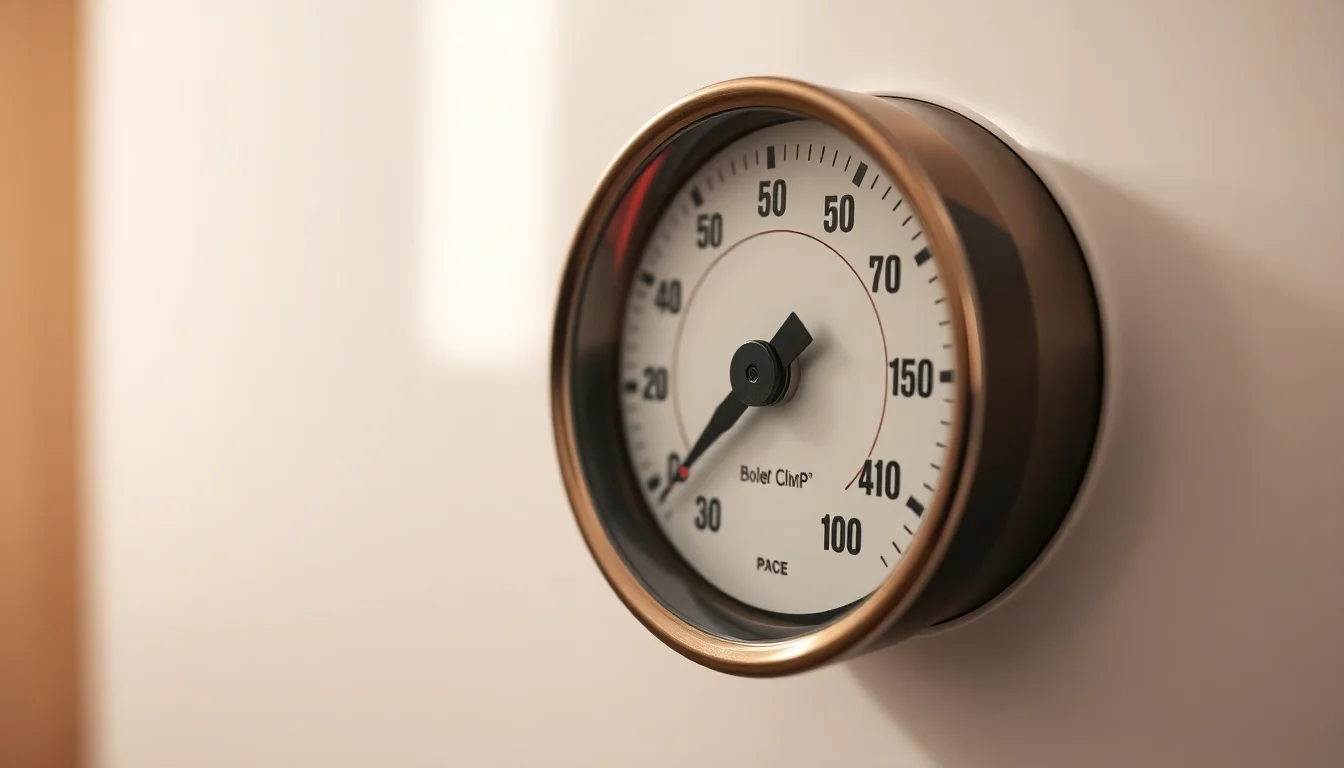
The pressure gauge on a boiler shows the pressure of water inside the sealed heating circuit, usually measured in bar. For most combi and system boilers, the normal range sits between 1.0 and 1.5 bar when cold, rising slightly once the heating is running. If the needle drops below the low mark, the boiler often locks out or shows an error code, because there isn't enough pressure to keep the pump and heat exchanger operating safely.
A "losing pressure" reading means water is leaving the closed loop faster than it's replaced, or air has taken up space that should be water. Telling which of those is happening is the first step to distinguishing a harmless one-off dip from a fault worth looking into.
Common Reasons a Boiler Loses Pressure
A leak somewhere in the system
Even a small, slow drip — from a radiator valve, a pipe joint, or one of the boiler's own internal seals — can let water escape gradually enough that you never see a puddle, while the gauge still falls over days or weeks. Leaks often show up first at radiator bleed valves, towel rail connections, or anywhere pipework runs through a wall or floor. Because the system is sealed, any water lost has to be replaced through the filling loop, which is exactly why the gauge keeps dropping.
Air introduced after bleeding radiators
Bleeding a radiator releases trapped air, but if the bleed valve isn't closed tightly afterwards, air can be drawn back in as the system cools. That air takes up space that should be water, so the reading drops. This is usually most noticeable in the day or two after bleeding several radiators.
A faulty expansion vessel
The expansion vessel absorbs the increase in water volume as the system heats up. If its internal diaphragm fails, or it loses its pre-charge, it can no longer accommodate that expansion properly — sometimes pushing excess water out through the pressure relief valve, sometimes allowing a slow leak into the vessel's air side that gradually reduces system pressure.
A faulty pressure relief valve (PRV)
The PRV opens to discharge water if pressure exceeds a safe limit. A worn valve seat or trapped debris can make it weep continuously even at normal pressure — a slow trickle that's easy to mistake for a leak elsewhere.
Is It Safe to Keep Topping Up the Pressure Yourself?
Topping up via the filling loop — opening the valve, letting water in until the gauge reaches the recommended level, then closing it again — is safe when done occasionally, such as once after bleeding radiators or after a rare small dip.
The problem starts when it becomes a habit. Needing to add water every few days, or every time the heating comes on, means the system is losing water faster than normal, and repeated topping-up just masks the cause. It isn't free of side effects either: fresh water introduces oxygen, which can accelerate corrosion in radiators and pipework over time, and repeatedly cycling the filling loop wears its own seals. Treat topping up as a temporary fix, not a routine.
When to Stop Diagnosing It Yourself and Get It Looked At
A few signs point to a fault needing proper investigation, not another top-up:
- The pressure drops again quickly after you've just topped it up — within an hour or two of the heating running.
- You hear gurgling or banging from radiators or the boiler itself.
- You notice damp patches, staining or mould around radiators, pipe joints, or the boiler casing.
- The boiler repeatedly locks out or shows a low-pressure error code, even after the pressure has been restored.
- Water is visibly dripping from the pressure relief valve's discharge pipe (usually a short pipe running to an outside wall).
- Pressure keeps falling even though every radiator valve has been checked and closed properly.
These point to something that needs a proper look — testing for a hidden leak, checking the expansion vessel's charge, or inspecting the PRV — rather than a fix you can reliably do yourself. If your boiler has stopped working altogether, or you're dealing with a wider plumbing emergency alongside it, our guide on what to do during a drain or boiler emergency covers the immediate steps to take before help arrives.
How to Check and Top Up Pressure Safely
- **Find the gauge**, usually on the boiler's front panel, with a marked safe range.
- **Note the reading** — below around 1.0 bar when cold means it needs topping up.
- **Locate the filling loop**, a braided hose with a valve at each end, often underneath the boiler.
- **Open both valves slowly**, listening for water flowing through.
- **Stop** once the gauge reaches the middle of the recommended range, around 1.2–1.5 bar.
- **Close the valves fully**, boiler-side first, then the mains side.
- **Check again later** — a noticeable drop after 15–20 minutes of heating is worth noting for whoever looks at the boiler next.
If you're unsure about any of these steps, it's safer to leave the system as it is and get it checked than risk over-pressurising the circuit.
Preventing Pressure Loss and What a Repair Visit Involves
A few habits help: close radiator bleed valves fully after use, keep an eye on pipe joints and radiator valves for early signs of dampness, and mention any pressure quirks at your next annual boiler service so they get checked properly rather than left to recur.
For a boiler that's genuinely losing pressure across Stoke-on-Trent and the surrounding area, a boiler repair visit typically confirms whether the loss is gradual or sudden, checks for a leak, and examines the expansion vessel and PRV for wear. Get in touch through our contact form to arrange a visit.
Frequently Asked Questions
**Why is my boiler losing pressure but I can't find a leak?** Not every cause of pressure loss shows up as visible water — a failing expansion vessel or a weeping pressure relief valve can both cause a steady drop without any obvious puddle. If you've checked the usual places and found nothing, it's worth having the expansion vessel and PRV checked specifically rather than continuing to search for a leak that may not be externally visible.
**Why does my boiler lose pressure when the heating is switched off?** This can point to a leak that's more noticeable once the system cools and contracts, or to a fault in the expansion vessel that behaves differently depending on system temperature. It's a pattern worth mentioning specifically if you do arrange a repair visit, as it can help narrow down the cause.
**Why does my boiler pressure drop overnight?** Pressure drops that happen specifically overnight, when the heating is idle and the system is cooling, often point towards a slow leak rather than an air-related issue, since bled radiators typically show their effect sooner. A consistent overnight pattern is useful information for diagnosing the fault.
**Is it normal for boiler pressure to need topping up every couple of weeks?** No — a well-sealed system shouldn't need regular topping up at all. Needing to add water every couple of weeks is a clear sign of an ongoing fault, whether that's a small leak or a component like the expansion vessel or PRV that isn't working as it should, and it's worth having looked at rather than treated as routine.
**What does it mean if my boiler is constantly losing pressure?** Constant, repeated pressure loss almost always means there's an active fault somewhere in the sealed system rather than a one-off event. The most efficient path is usually a proper check of the whole system — leaks, expansion vessel, and PRV — rather than continuing to top up and wait to see if it stops on its own.


