TL;DR
If your kitchen sink keeps clogging despite rodding, or drains run slow again within days of being cleared, high-pressure drain jetting is usually the next step — it scours the full pipe wall rather than just pushing a path through the blockage, removing built-up fat, grease and scale that rodding leaves behind. Persistent gurgling, recurring smells, or several fixtures slowing down at once are also signs jetting will help. Find out more or arrange a visit through our online contact form.
Signs a Simple Rod Isn't Enough
Homeowners across Stoke-on-Trent usually reach for drain unblocking first, and for a single stubborn clog that is often all that's needed. But a few signs point to something a rod can't fully fix:
- **Water drains slowly** even after you've cleared the visible obstruction with a plunger or hand rod.
- **The same fixture blocks again within days or weeks**, which usually means material is still clinging to the inside of the pipe rather than having been fully removed.
- **Gurgling sounds** from a drain when another appliance runs, suggesting trapped air behind a partial restriction further along the run.
- **Recurring odours** rising from a sink or shower tray, often caused by grease or food waste that a rod has pushed past rather than cleared out.
In Stoke-on-Trent's older terraces, where pipework is frequently narrow-bore clay or cast iron, these symptoms tend to point to a layer of scale or congealed fat lining the pipe — something a rod can push through once but won't remove.
Jetting vs Rodding: What Each Actually Does
A drain rod (or auger) is a flexible steel cable that physically breaks up or pushes a blockage along the pipe. It clears a pathway, but the pipe walls themselves are largely untouched — any grease film, scale or mineral deposit stays exactly where it was.
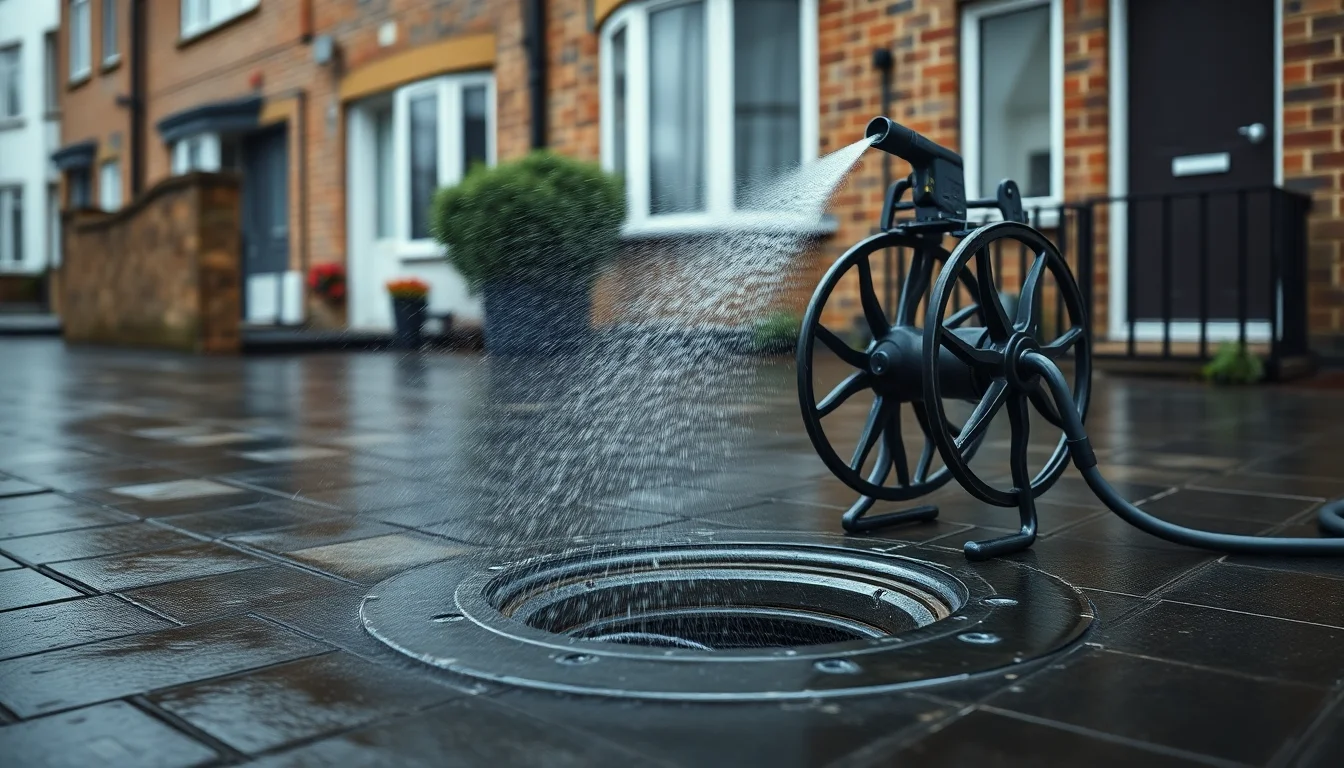
Drain jetting instead uses a specialised hose that directs water at high pressure through a rotating nozzle. Rather than punching a single hole through the blockage, the jet scours the entire internal circumference of the pipe as it travels along the run, flushing out debris and cutting through grease and scale as it goes. The result is a genuinely clean pipe, not just a temporarily cleared one — which is why it tends to hold up far longer against the same blockage recurring. For a closer side-by-side look at when to use which, see our comparison article on drain jetting versus drain rods.
Rodding still has its place — it's well suited to a single, solid obstruction such as a root tip or a foreign object caught at one point. Jetting is the better call when blockages keep recurring, when fat or grease is the suspected cause (very common in kitchen drains), or when an entire run is showing reduced flow rather than just one fixture.
Domestic vs Commercial Drain Jetting
Domestic properties
Most homes across the six towns — Hanley, Burslem, Tunstall, Longton, Fenton and Stoke — are Victorian or Edwardian terraces built with narrow foul-water and waste pipes by modern standards. Over decades, these older lines can develop restricted passages from corrosion, scale, or the ground shift associated with the area's coal-mining history. Domestic drain jetting typically targets kitchen sinks, bathroom waste pipes and outside gullies — dealing with cooking fat, hair, soap residue and the occasional root intrusion from a nearby garden.
Commercial premises
Businesses such as takeaways, cafés and pubs generate a much higher volume of grease-laden waste and often run larger-diameter pipework to cope. Commercial kitchens tend to need jetting on a more scheduled basis to prevent grease traps overflowing and to stay on the right side of Severn Trent Water's trade effluent expectations. Because flow rates and usage are higher, scale and biofilm build up faster than in a typical home, which is why jetting is a more routine part of commercial maintenance than domestic.
What a Jetting Visit Involves
A visit normally starts with an inspection of the affected drain — sometimes with a small camera — to locate the blockage and check the general condition of the pipe before jetting begins. This confirms jetting is the right approach and flags any fragile or already-damaged sections that need careful handling.
From there, access points are cleared, the jetting equipment is connected, and a flexible hose with a rotating nozzle is fed into the pipe. Water is pumped through at high pressure, scouring the pipe walls as the nozzle travels the length of the run, with dislodged debris flushed out through the nearest access point. A final check afterwards confirms the pipe is genuinely clear and flow has been restored — not just that the immediate blockage has moved on somewhere further down the line.
Older Pipework and Ground Movement in Stoke-on-Trent
Much of the city sits on former coal-mining ground, which has occasionally led to subtle settlement over the years — enough, in some cases, to shift a joint slightly and create a small offset where debris collects more easily. Victorian clay pipework is also prone to cracking with age, and older cast-iron sections can develop internal rust that narrows the effective bore of the pipe.
Because jetting cleans the entire internal surface rather than just breaking through a blockage, it can remove rust scale and mineral build-up that reduces flow even when the pipe itself remains structurally sound — often restoring performance without the cost or disruption of replacing the pipe. Where ground movement is a known concern, pairing a jetting visit with a CCTV drain survey gives you a clearer picture of whether joint alignment is changing over time.
Keeping Drains Clear for Longer
A few habits reduce how often jetting is needed in the first place:
- **Avoid pouring fat, oil or grease down the sink** — let it cool and solidify, then scrape it into general waste.
- **Fit a simple drain strainer** in sinks and showers to catch hair and food debris before it reaches the pipe.
- **Run hot water after washing up** to help move any residual grease along before it has a chance to solidify inside the pipe.
If slow drainage keeps returning, several fixtures are affected at once, or smells persist despite regular cleaning, it's worth having the drain properly assessed rather than repeatedly rodding the same recurring blockage. Get in touch through our online contact form to arrange a jetting visit tailored to your property.
Frequently Asked Questions
**Is drain jetting available near me in Stoke-on-Trent?** Yes — we carry out drain jetting across Stoke-on-Trent and the surrounding area, including Newcastle-under-Lyme, Stafford, Crewe, Congleton and Leek, for both domestic and commercial properties. Whether it's a single blocked kitchen sink in a terraced house or a larger commercial run, the same high-pressure jetting equipment and approach applies, adjusted for the scale of the job. Get in touch through our contact form with your postcode and we'll confirm we cover your specific address.
**What's the difference between commercial and domestic drain jetting?** Domestic jetting generally deals with kitchen, bathroom and outside gully drains around a single home, using equipment sized for standard residential pipework. Commercial jetting covers larger-diameter pipework and higher volumes of grease-laden waste typical of kitchens, and is often carried out on a scheduled basis rather than as a one-off.
**Is drain jetting worth it, or is rodding enough?** For a single, isolated blockage, rodding is often sufficient and more proportionate. Jetting earns its cost back when blockages keep recurring, because it removes the grease, scale or debris lining the pipe rather than just clearing a path through it — meaning the same blockage is far less likely to come straight back.
**How often should drains be jetted?** There's no single answer that applies to every property — it depends on the age of the pipework, how the drain is used, and its history of blockages. Older Stoke-on-Trent terraces with narrow-bore or ageing pipework tend to benefit from more frequent attention than newer housing with modern plastic drainage.
**Can drain jetting damage older pipework?** A competent operator will assess the condition of the pipe before jetting and adjust pressure accordingly, which is why an initial inspection matters. Pairing jetting with a CCTV check beforehand is a sensible precaution on older or already fragile pipework.